Sunday, 29 July 2012

snapshots: harbourside festival 2012

22nd July 2012

Harbourside, Bristol

Pero's Bridge welcoming the crowds to Bristol's 41st annual Harbourside Festival. 
Getting down mid-afternoon, I took a seat on the cascade steps which  plunge down into St. Augustine's Reach to enjoy Bashmema finish off her set by playing out Nina Simone's 'My Baby Just Cares For Me' to a sun-worshipping audience.
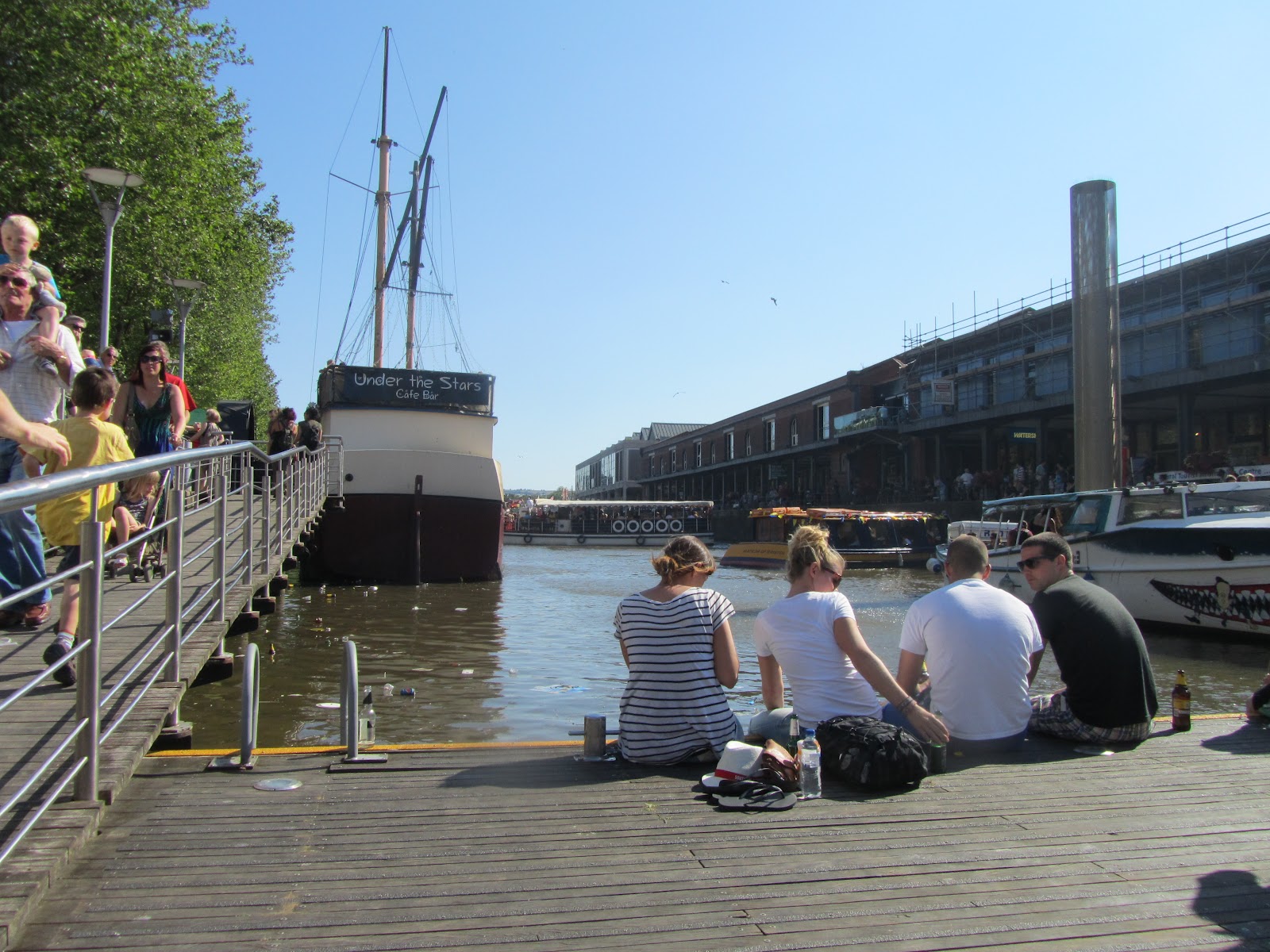
Down by the water; under the stars.
Millennium Square in full swing. The crowds reflected into the clear blue sky.
Four points of view.
@Bristol.
The Millennium Square mime troupe.
After venturing down the slope to the Loyd's Amphitheatre, I came across a sign which directed me to the 'Happy City stage' where a motley crue by the name of One Shot got Bristol dancing to some Funky Dub Reggae. On the same tip as Gentleman's Dub Club minus the animated frontman.
The boats of Bristol harbour.
"Give I a cider!" - 6pm.
In his element.
The Rozzers patrolling Queen Square.
(Sittin' On) The Dock of the Harbour.
In flight.
Banging a djembe in Queen Square.
Walking home. A Cotham sun set.

Sunday, 1 July 2012

the end of it all....

1st July 2012

Bristol, England

           "Once a journey is designed, equipped, and put in process, a new factor enters and takes over. A trip, a safari, an exploration, is an entity, different from all journeys. It has personality, temperament, individuality, uniqueness. A journey is a person in itself; no two are alike. And all plans, safeguards, policing, and coercion are fruitless. We find after years of struggle that we do not take a trip; a trip takes us. Tour masters, schedules, reservations, brass-bound and inevitable, dash themselves to wreckage on the personality of the trip. Only when this is recognized can the blow-in-the-glass bum relax and go along with it. Only then do all frustrations fall away." - John Steinbeck
   

            So after three continents, twelve countries, eighty six blog posts and two hundred and forty seven days of travelling through sun-scorched deserts, humid jungles, squalid slums and windswept valleys on a variety of buses, bikes, cars, trains and planes, the finishing line of this terrific world marathon has finally been reached and I find myself back home. Predictably I'm finding it quite hard to adjust and digest everything that's happened to me since last October, although thankfully this blog does allow me to break down the months into manageable memories that help me reflect upon the ambitious path I have trodden since India. The trip, as Steinbeck so eloquently puts it, did indeed ignore my tentative pre-planned steps back in Delhi and instead thrust me upon an uncertain trail filled with terrifying but exciting new experiences. Although it's true that things calmed down once I had got my bearings, there have been many other times since then where I have been forced back onto that wild pathway and although I often feel uncomfortable when there, I relish these moments as I learn the most from them. I remember being sat in my room during the final weeks leading up to this trip, frantically taking notes of things that I apparently must see and do in each country. Although I'm sure a lot of what I read subconsciously informed later decisions, ultimately it was not really necessary as the real excitement and freedom granted by travelling independently is only truly exercised by occasionally throwing both caution and guidebooks to the wind and allowing fate to decide your next step. Some of the best experiences I had during my travels did not come about by reading the lonely planet but by taking a gamble and stumbling upon them unexpectedly. The key thing to acknowledge is that there are so many opportunities that pop up on the road but they are often only accessible by accepting that you can't control when or how they will present themselves. All you can ultimately do is to make sure you prepare yourself properly before leaving and then once on the plane, open your mind and let whatever happens, happen. 

Thanks for reading.

x


final days in rio

8th - 13th June 2012

Rio de Janeiro, Brazil


            Turning to the final chapter of my story, I awoke mid-afternoon on the 8th June 2012 to find myself pulling into the central bus terminal of the exhilarating, beach-bound metropolis that is Rio de Janeiro. Excited by the thoughts of ending the adventure with a bang in this world-famous carnaval city, I left the station with my new found Swedish friend Maya - who had been sitting next to me on the 24hr coach from Puerto Iguazu - and hopped on a local bus towards the golden sands of the iconic Ipanema beach. Maya had already booked a dorm room in the stylish barrio (neighbourhood) and she suggested I tag along to see if the small hostel had any more beds available. Having once again forgotten to pre-book anything myself, I decided to join her and after searching for the address she had written down for the hostel, we finally stumbled across the "Girl From Ipanema" guesthouse which had tucked itself down a small alleyway around two blocks back from the beach. Luckily, I managed to nab a bed although it did set me back an extortionate 50 Reals (£15!) - quite a shock to the system having enjoyed £5 beds for weeks in cheap-as-chips Bolivia... After checking in at the front desk, I went for a walk with la chica con el sombrero rojo down to the glowing beach where we sat and watched the last light fade from the sky. Lying back on the fine white sand, ferocious waves crashed into the beach while people sat behind us in the promenade bars enjoying the warm evening with their glasses of caipirinhas. This was it, I had arrived!  Rio de Janeiro is probably one of the most beautiful cities on the planet and as a final stop on my long journey, I feel that I definitely saved the best until last. Over the past eight months I have been lucky enough to visit many of the world's major metropolises: Delhi, Bangkok, Saigon, Sydney, Buenos Aires and La Paz have all captivated me in their own mad way and Rio, I'm glad to say, was no different. The lucid energy and dazzling atmosphere of the "Cidade Maravilhosa" struck me the moment I stepped off the bus and my excitement reached new levels when I caught my first glimpse of the outstretched arms of Christ the Redeemer who perched magnificently on his throne up among the clouds. I spent a few days in the barrio of Ipanema wandering along the cosmopolitan roads of the affluent area by day and kicking back in the numerous beach-side bars by night. On the Friday evening a few of us from the hostel jumped in a taxi and headed over to the notorious Lapa street party which takes place every week beneath the iconic white archways that span a vast central square. Getting out of the taxi, we ran for shelter from a monsoonal deluge which had started to tip down from the heavens and although everyone was soaked within minutes there was little that nature could do to dampen the spirits of the caipirinha-chugging weekend locals who danced into the downpour until finally seeking refuge in the Circo Voador mega club that lurked between the glistening archways. Here is Lapa by day:

The famous white Lapa archways.
Lapa Town.
Besides the archways the other thing Lapa is famous for is the Escardaria Selaron. The mosaic steps of Chilean born artist Jorge Selaron attracts thousands of tourists to the edgy neighbourhood. 
Location of Rio within Brazil.

                  Wanting to see a bit more of the city, I decided to leave Ipanema and headed over to the adjacent neighbourhood of Copacabana on the Sunday as I found a charming hostel by the name of Pura Vida  for just 20 Reals (£6)  a night. A former home to an extravagant Polish ambassador, the new owners had preserved the ornate architecture, chandeliers and wooden interiors which adorned the grand-looking building making it a very pleasant final place to rest my head before heading home. Walking the 100 metres down to the beach on the Sunday morning, I strolled along the geometric mosaic waves of the Copacabana promenade while legions of joggers and rollerbladers filled the main road which had been closed for the day. Stepping down onto the beach, I headed towards the jutting rock of the Arpoador which connects Copacabana with Ipanema while the sun sank behind a congregation of clouds in the sky. The beach itself was no less busy than the road as volleyball players dived across their sandy courts while surfers jogged towards inviting waves and teams of footballers whipped balls across their yellow pitches. Stopping for a beer at one of the small promenade bars, I looked down the length of the beach and saw the Pao de Acucar (Sugarloaf) rising imperiously in the distance; the small cable cars could just be seen ferrying people back and forth between the two famous oval peaks that jut out into the Atlantic. Here is Copacabana:

To have such an incredible beach so close to a major city is one of Rio's Ace cards. 
Extravagant sand castles line the promenade.
Pao de Acucar . The Sugarloaf
Final night on Copacabana.
              Losing myself in the hustle and bustle of this exciting city, I suddenly realised on the Sunday evening that only four days remained before I was due to catch my flight back home and I had still not fulfilled my primary objective in Rio. On the Monday therefore, I set off from the hostel mid-morning with my sights set firmly on the top step of Cristo Redentor. The world-famous Christ the Redeemer statue which stands elegantly atop the 700 metre high Corcovado mountain, took nine years to build and at 130ft high it is actually the fifth largest statue of Jesus in the world weighing in at a phenomenal 635 tonnes. I had been thinking about this statue for awhile and in my head had built it up as the symbolic finish line for the whole trip. It wasn't just another tourist attraction for me, it was a fitting conclusion to my journey. Now the weather, it has to be said, was not fantastic during my stay in Rio and although I often awoke to find a clear blue expanse occupying the sky it frequently descended into clouds and humid rain by mid-afternoon. As I trundled along towards the base of the famous statue on the Monday morning in a local bus from Copacabana, I noticed a gang of ominous clouds which had started to impose themselves upon the clear day. Arriving at the base of the Corcovado mountain, the sky was still valiantly holding on to a few of it's remaining blue ribbons but as I boarded the small train which shuttles people up to the statue, I groaned as the gentle patter of rain started to drum upon the roof of the carriage. After a brief ten minute chug to the highest station, I exited the train and saw that the blue sky had gone and been replaced by a blanket of grey clouds that were grower darker by the second. Looking up towards the sharp peak of the mountain, Christ the Redeemer loomed above me with his outstretched arms as I paced two at a time up the final set of stairs to the end of my journey. Nearing the top, I brought my foot down upon the final step and in doing so, closed this particular chapter of my life. Walking along the pathway to the far balcony, the city of Rio de Janeiro spread out before me and although the rain had since started to lash down in a manic fervour, I stood and looked out over the last eight months of my life; letting memories of light seep across the final page of my story.

Thank you Rio. Thank you world.

It's time to go home.

x

First glimpses of Criso Redentor.
Catching the train to the top of the Corcovado.
The final symbolic top step of the Corcovado. 
Christ the Redeemer.
Bye bye Rio.

Monday, 25 June 2012

the mighty falls of igauzu

7th June 2012

Igauzu Falls, Argentina


              Returning to the hustle and bustle of Santa Cruz on the morning of the 2nd June having lived the hammock life in Samaipata for just under a week, I made my way back to the Bi-Modal bus terminal and booked a seat on the next departing service bound for the capital of Paraguay. At 7.30pm that evening, I therefore embarked upon yet another long haul bus journey into the twilight hours arriving in Asuncion around twenty three hours later just as night-time was settling into the strange new city. I spent three unexciting days in this dreary capital and if I'm honest I was not massively in awe of the rundown, mundane and depressing city that I came across and in many ways my arrival there felt like stepping back into the grim side of the 1980's. People had advised me against visiting Paraguay but I hate judging a place based on unfounded hearsay as many of these people had never actually visited the country. Ignoring the warnings and seeing as it was a natural pit-stop en route to Rio, I thought I would at least give the landlocked country a chance to prove itself. It didn't. I won't bore you with the lackluster days I spent in Asuncion as they mostly involved a great deal of writing and eating my body weight in empanadas.  Needless to say, I was eager to move on as soon as possible and the new target I set my sights on was the fabled waterfalls of Iguazu which would hopefully prove to be a far more interesting affair. These mighty falls actually rest at the meeting point of three countries: Paraguay to the West, Brazil to the North and Argentina to the South and although Paraguay is very close to the waterfalls it is only possible to visit them from the Brazilian and Argentinian sides. Each of these two sides also offer very different experiences as viewing them from Brazil gives a wide panoramic perspective of the rushing waters as a whole whereas the Argentinian side allows you to get right up close to the action and the opportunity to look down into the famous Garganta del Diablo or "Devil's Throat"; a massive U-shaped ring where several powerful waterfalls conjoin to form a Herculean display of cascading water. The multitude of cataracts rest deep within the jungle and are located where the strong currents of the Igauzu river tumble over the edge of Southern Brazil's enormous Parana Plateau. Compared to the Niagara Falls, Iguazu is four times as wide, half as high again and carries seven times more water and in 2011 they were voted as one of the "New7Wonders of Nature" to crown them the king of waterfalls. I had been told by nearly everyone who had visited Iguazu that although the Brazilian view points undeniably offer some spectacular vistas, if they were to pick one side the impressive ability to get right up close to the base of the falls on the Argentinian sides gives it the slight edge. With money and time dictating everything I now do, I therefore decided to take their advice and headed towards the small Argentinian town of Puerto Igauzu which is the jumping off point for visiting their side of the falls.

"When we stand at the foot of this world of cascades and, raising our eyes, see 269 feet above us, the horizon filled with a line of waters, this awesome spectacle of an ocean pouring into an abyss is almost frightening." - Swiss botanist Robert Chodat.

Catching the first bus up to the Igauzu National Park, I arrived at the entrance when it opened at 8am and made my way straight towards the small electric train which ferries people back and forth from the main attraction of the park, the Devil's Throat, as I was eager to check out the 82 metre high powerhouse before the crowds descended upon it. Strolling towards the station, a flash of orange was caught in my peripheral vision and turning my gaze to the slender branches of a nearby tree I saw several Toucans perched in the early morning light; their instantly recognisable flaming beaks pointing towards a retreating moon which hung defiantly in the early morning sky:

Toucan.
The Toucan and the moon.
Location of Iguazu.
It was an extremely brisk morning in the national park as I sat rigid on the cold wooden bench of the open-sided train waiting for it to depart. At the stroke of 8.30am, we finally trundled out of the station and into the sunlight heading slowly but surely up to the top of the waterfalls; cutting a wide arc around the roaring ridge of water which was hidden from view by the thick bush. Alighting at the final station, I ran ahead of the crowds - as I had done at Machu Picchu - and headed onto a metal pathway that crossed the Rio Iguazu Superior towards the famed Devil's Throat. Traversing the metal gangway which hovered above the different channels of the river, I came across tree covered islands where dappled sunlight peeked through the branches to the metal path below. Breaking through one final island, the true scale of the Devil's Throat came into view as a huge plume of mist rose from the narrow gullet; joining the ruptured earth with a seamless sky. The roar of crashing water was electrifying as I covered the last 100 metres to a rectangular platform which stretched out to where a powerhouse display of natural forces was in effect. The agitated whitewater poured endlessly over the edge of the ridge; crashing over different ledges before plunging at great speed into the thick mist which erupted from the depths of the gorge. Looking into this morning cloud, a troupe of adventurous swallows dived through the spray; deftly flicking their wings as they raced past the colliding waters:  

Getting on the electric train.
Walking towards the Devil's Throat.
Approaching the Devil's Throat.
Chaos.
Nearly 275 individual waterfalls exist in the park and the main rim stretches out from the Devil's Throat for nearly 4km making it one of the largest collection of cascades in the world. Some of the falls tumble unbroken into the Rio Iguazu Inferior whereas others topple and smash themselves upon different ledges of tough volcanic rock and solidified lava. The amount of waterfalls does vary depending on the time of year and during the height of the rainy season, the river swells to a Poseidon-style flood where over two million gallons of water flow over the Iguazu ridge every second. A truly phenomenal display of nature's power and after retreating back down from the Garganta del Diablo, I spent a couple of hours wandering along metal pathways which escorted me right up to the bases of these staggeringly powerful waterfalls -  too close in fact as I got drenched on more than one occasion! Walking past Myriad islands and the soaring rainbows which had caught themselves among pouring rocks, the other cataracts which sit between the Union and San Martin Falls that flank the ridge were no less impressive than the main attraction I had seen at the beginning of the day. Endless channels of pulverized water were being pumped down into the plunge pools which sit among a rich tapestry of both tropical and subtropical flora and fauna. The craggy outcrops which stand marooned between the plummeting currents serve as a home to exotic parrots and although I didn't see any, the park also has a population of Ocelots and Jaguars which roam the dense forest wilderness. At 1pm I unfortunately had to leave this veritable Garden of Eden as I was due to catch yet another overnight bus although this time the destination would be the final chapter in my story.

x


Parque Iguazu.
Hundreds of waterfalls fill the park.
Got a little too close to the base of this one and got drenched for stepping too far.
Catching a Rainbow.

A marooned waterfall island.

The falls of Igauzu.

Saturday, 23 June 2012

the samaipata detox

28th May - 2nd June 2012

Samaipata, Bolivia

         
                      All good things must come to an end and so on the 27th May 2012, I bid farewell to Laura and James for the last time and boarded an overnight bus heading East towards the city of Santa Cruz. With just over two weeks remaining on this trip, I was eager to hit the road again as there were still much I wanted to see and do before stepping onto that plane in Rio; a final step which would bring all of this to a fitting end. With my liver and bank balance reeling from a few heavy nights in the chaos bowl, I decided to make a pit stop in the peaceful town of Samaipata - which rests about 120km West of Santa Cruz - for a few days to relax and conserve money before pushing on towards Paraguay and the mighty falls of Iguazu. With no direct bus to Samaipata from La Paz, it was necessary to head into the heaving metropolis of Santa Cruz where I would then be able to catch a taxi over to the tranquil hill station which nestles within an idyllic forest valley. Arriving into the oppressive heat of Santa Cruz on the morning of the 28th after an epic 17 hour slog from La Paz, I  made my way into the centre of town after managing to catch one of the micros (minivan) which were parked outside the bus terminal; although getting the driver to understand where I wanted to go involved my usual mess of kindergarten Spanish and manic arm gestures. I have really struggled with the language since arriving in South America and in hindsight, if I ever come back, I'm definitely going to take some Spanish lessons before I do so. Although I have done and seen some amazing things while here, I feel that half the experience of travelling rests in being able to talk to local people, hearing stories that really show you how the other side live; something which I have unfortunately been unable to do because of the soaring language barrier that loomed every time I opened my mouth. Although certain basic phrases made their way under my belt, I would love nothing more than to be able to have a proper conversation with any one of the numerous curious locals who have approached me looking for a chat. A shameful 'No hablo castellano' was all I could often muster to my repeated frustration. Looking back, one of the things I loved about India was that a lot of people spoke English there which meant that I was often invited for a cup of chai or some food by inquisitive locals and taking those measured leaps of faith led to some fantastic conversations and experiences. Drifting from one gringo hostel to another within South America has made learning Spanish quite difficult for me as English, in it's all encompassing universality, dominates most conversations in backpacker hostels. In saying that, I met quite a few people who had bravely broken away from the safety bubble of English speaking tourists by doing several home stays with local families which sounds like a fantastic and very effective way of learning a new language and is something I would honestly love to do in the future.

                 After being dropped off by the Plaza 24 de Septiembre, I located the central tourist office to find out the best way of getting to Samaipata and was told that shared taxis left for the hill station from the corner of Omar Chavez Ortiz and Soliz de Olguin and only cost 30Bs (£3) per person, a mere 5Bs more than the local bus. Getting the lady in the tourist office to mark this corner on my map, I strolled down the length of calle Independencia and rounding a corner I came across two other travelers sat in the shade of a crumbling wall outside the taxi office. It soon emerged that the vans didn't leave until five people needed to go and so I took a seat next to them while we waited for others to show up. At around 2pm after chatting with the French hippies who were planning on doing some camping outside Samaipata, two more people finally turned up and we all piled into the van and headed West out of the city. A couple of hours later, after powering our way up the winding valley road, we finally arrived in the small town of Samaipata just as the sun was closing the day. After trying a few fully booked lodgings, I finally settled in at the peaceful Hostel Andorina where I was greeted by the slightly strange but pleasant enough Dutch Andreas who showed me to my room. I spent about five days in this sleepy but charming town and the following photographs document my Samaipata detox.

x

Welcome to Samaipata.
The location of Samaipata within Bolivia.
On the second night in the sleepy town, the usually quiet central square burst into action to celebrate 400 years since the founding of the town. A stage had been erected where bands and comedians entertained the crowds who had turned up for the event.
Along with a German/French couple I met at the hostel, spent the Wednesday morning at a local animal sanctuary which rested 20 minutes walk out of town. 
Entering the zoo.
The idyllic little sanctuary had a few monkey houses for the more aggressive primates but there were about ten others that were allowed to roam around the grounds as they pleased
Like this little fella.

They were inquisitive little creatures who loved to play with anyone. 
Hostel Andorina were I stayed for £4 a night!
The Andorina courtyard. Stairs at the back of the photograph led up to a balcony where I spent many hours swinging in the hammocks and FINALLY finishing the epic Shantaram.
The main high street.

The central square of Samaipata.

The quiet life.

Five days was enough for me because although I enjoyed the relaxing nature of the place I was eager to get back to the hustle and bustle of a city.